Detroit's Living Soundtrack: How Motown Legends and Techno Pioneers Are Shaping the Venues of Today
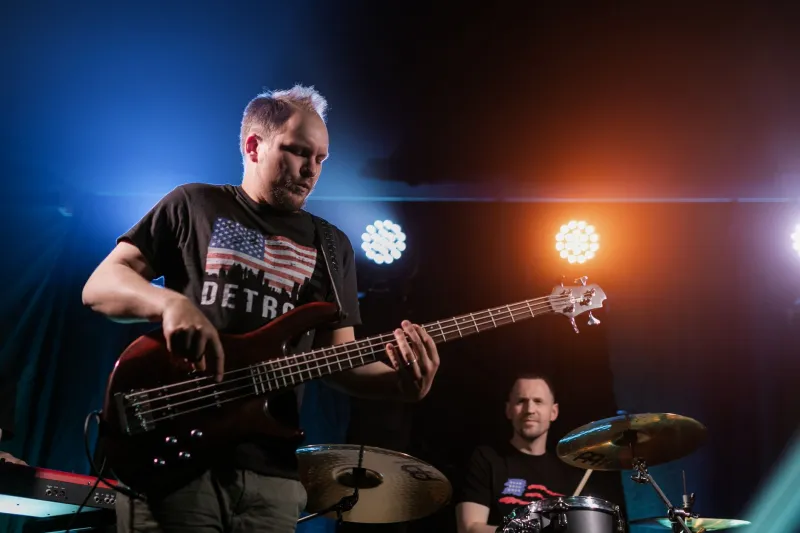
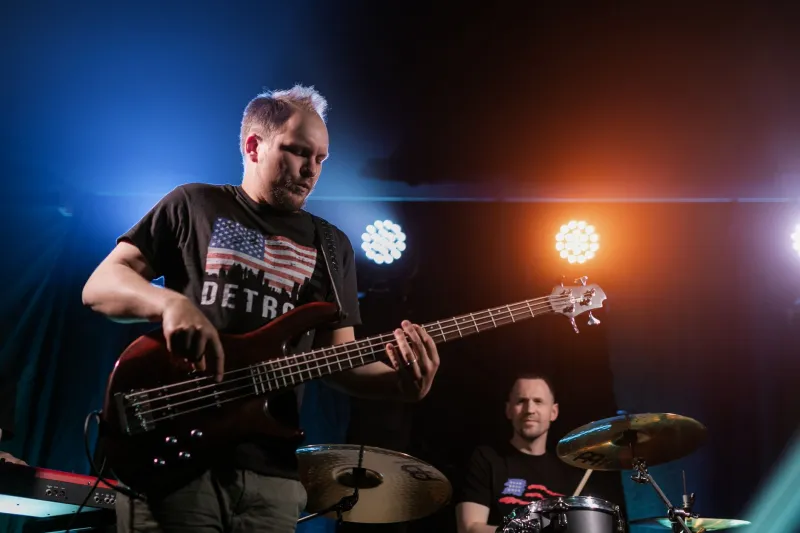
There's a moment, if you've ever stood inside a Detroit venue on a Friday night, when the music stops feeling like entertainment and starts feeling like something older. Something earned. It's in the low hum of a synthesizer at a converted warehouse in Midtown. It's in the way a jazz-funk band on a small stage in Corktown seems to be playing not just for the room, but for everyone who ever played a room like it before them. Detroit doesn't just have a music scene. It has a music memory — and in 2024, that memory is louder than ever.
The Blueprint Is Still the Blueprint
When people talk about Detroit's musical identity, two eras dominate the conversation: the Motown years of the late '50s and '60s, and the techno explosion of the mid-'80s. On the surface, they couldn't seem more different — one built on harmonized vocal groups, lush orchestration, and crossover pop ambition; the other stripped-down, machine-driven, and deliberately underground. But ask any Detroit musician or venue operator worth their salt, and they'll tell you the connection is direct.
Both movements were responses to the city's industrial character. Both were born from communities that weren't being handed a spotlight. And both produced sounds that the rest of the world spent decades trying to replicate.
That dual legacy isn't just something Detroiters are proud of. It's something they're actively building on.
Venues That Know What Floor They're Standing On
Take the Tangent Gallery in Eastern Market. It's been hosting everything from experimental noise acts to hip-hop showcases for years, but what makes it interesting in the current moment is how deliberately its programming nods to Detroit's layered history. Events there often blend visual art with live performance in ways that feel indebted to the multimedia ambition of early Motown — the idea that a song isn't just a song, it's a presentation.
Over in Midtown, the Marble Bar has become a genuine institution for the city's electronic music community. The sound system alone is a statement of intent — the kind of setup that treats bass as a structural element rather than an afterthought. Regulars will tell you there's a reverence in the room on the nights when a local DJ digs deep into Detroit techno's original vocabulary. It's not nostalgia. It's more like fluency in a native language.
And then there's the Magic Stick, a venue that's been part of Detroit's live scene long enough to have witnessed multiple musical generations cycle through. Its programming in 2024 reflects a city that refuses to settle on a single identity — on any given week, you might catch an indie rock act, a neo-soul showcase, or a DJ night that blurs genre lines entirely.
The Artists Carrying the Torch
Emerging Detroit artists are increasingly vocal about the weight and the gift of the city's musical inheritance. Producers working in the electronic space talk about feeling a kind of responsibility — not to replicate what Juan Atkins or Derrick May created in those legendary basement sessions, but to understand why it mattered and then take it somewhere new.
Similarly, younger R&B and soul artists in the city are doing something fascinating with the Motown template. They're not trying to recreate the Hitsville sound. They're interrogating it, pulling out its emotional architecture — the call-and-response structures, the emphasis on live arrangement, the insistence on craft — and applying it to stories that are unmistakably 2024 Detroit.
This cross-generational conversation is happening live, on stages across the city, in real time.
Production Gets Serious
One of the more significant shifts in Detroit's live venue scene over the past couple of years is the investment in production quality. Venues that once operated on shoestring technical setups are upgrading — better lighting rigs, improved acoustics, more sophisticated stage monitoring. It's a sign that the city's entertainment infrastructure is maturing to meet the ambition of its artists.
This matters more than it might seem. Detroit's music has always punched above its weight globally. The gap between the quality of the music being made here and the quality of the spaces presenting it has, historically, been frustrating. That gap is closing.
Some of this is driven by the artists themselves demanding better conditions. Some of it is venue owners recognizing that Detroit's reputation as a music city is an economic asset worth investing in. Either way, the result is a live scene that feels increasingly capable of doing justice to the sounds being created within it.
What 2024 Actually Sounds Like
If you want to understand where Detroit's musical identity is right now, the most honest answer is: everywhere at once. On any given weekend, you can find a venue honoring the Motown tradition with a full live band and impeccable vocal arrangements. You can find a warehouse space hosting a techno night that feels like a direct transmission from 1988 — and another that sounds like it was made yesterday on Mars.
You can find jazz musicians who grew up listening to both, blending the two in ways that shouldn't work on paper but absolutely do in practice.
The city's venues are the containers for all of this. And the best of them understand that they're not just booking rooms — they're participating in an ongoing conversation about what Detroit sounds like, what it has always sounded like, and what it's going to sound like next.
That's not a small thing. In a music landscape where authenticity is constantly commodified and sold back to us, Detroit's live scene is doing something genuinely rare: it's keeping the argument alive.
Come listen.