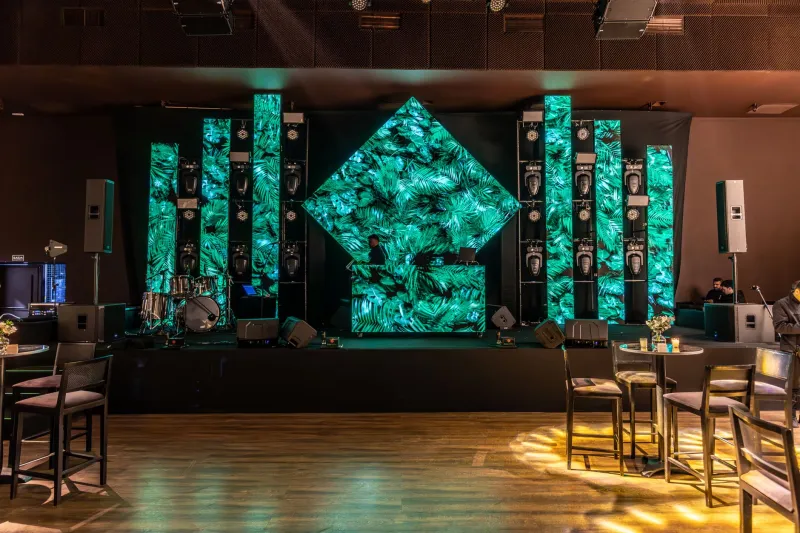
Loud Room, Real Talk: How Detroit's Smartest Venues Are Engineering Spaces Where You Can Actually Be Heard
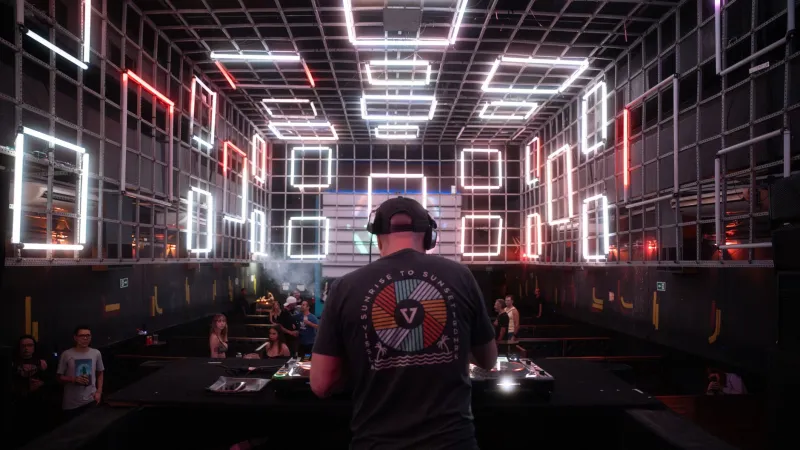
There's a particular kind of misery that's become almost ritualistic in American nightlife. You're standing three inches from your best friend, the bass is rattling your sternum, and you're basically reading lips just to figure out whether they said they want another drink or they're ready to leave. It's loud. It's always loud. And for a long time, loud was the whole point.
But something is shifting in Detroit's venue scene, and it's happening quietly — which, given the context, feels almost poetic.
A growing number of the city's most respected rooms are making a deliberate, sometimes counterintuitive design choice: they're engineering spaces where the music still hits, the energy still crackles, but you can actually hold a conversation without performing a pantomime. It's not about turning things down. It's about turning things smart.
The Problem Nobody Was Admitting
For years, the unspoken assumption in nightlife design was that volume equaled vitality. A loud room felt alive. A quieter room felt dead. Venue owners chased that wall-of-sound feeling because it signaled something was happening, that the night had weight to it.
The trouble is, pure decibel output without acoustic intention creates chaos. Sound bounces off hard surfaces — concrete floors, exposed brick, low ceilings — and turns into a kind of sonic soup where nothing is actually intelligible. You're not experiencing music at that point. You're just experiencing noise.
"There's a difference between a room that feels intense and a room that just feels overwhelming," says Marcus Delray, a Detroit-based acoustic consultant who's worked on several venue retrofits across Midtown and Corktown over the past few years. "The best spaces make you feel the music in your chest while still letting you catch what the person next to you is saying. That's not an accident. That's engineering."
Delray describes the phenomenon using a term borrowed from audio science: the "cocktail party effect." The human brain is remarkably good at filtering out background noise to focus on a single voice — but only up to a point. Once a room's ambient noise crosses a certain threshold, that filtering ability collapses. Everyone starts shouting to compensate, which raises the ambient noise further, which makes everyone shout louder. It's a feedback loop that turns a promising night into an exhausting one.
The Fix Is in the Walls
So what does intentional acoustic design actually look like in practice? The short answer: it looks like a lot of things you probably wouldn't notice unless someone pointed them out.
Speaker placement is one of the biggest levers. Traditional setups often rely on a handful of large, powerful speakers pointed at the crowd from a central position. The result is a blast zone near the front and a muddy echo chamber everywhere else. Venues that prioritize acoustic livability are increasingly moving toward distributed speaker arrays — more speakers, lower individual volume, positioned to deliver consistent sound pressure across the whole room rather than annihilating the first three rows.
Material selection matters just as much. Hard, reflective surfaces — think polished concrete, glass, bare drywall — bounce sound in unpredictable ways and contribute to that reverberant noise buildup. Strategic use of soft materials, acoustic panels, upholstered seating, even the texture of wall treatments, can absorb excess reflections without deadening the room's energy. The trick is balance: you want some liveness, some natural resonance. You just don't want the room working against itself.
Ceiling geometry is another underappreciated factor. Flat, low ceilings are acoustic nightmares. Angled baffles, varied ceiling heights, and suspended diffusion panels can redirect and scatter sound in ways that keep the room feeling dynamic without letting it devolve into a roar.
"It's almost like acoustic judo," Delray explains. "You're not fighting the energy of the room. You're redirecting it so it works for you instead of against you."
What the Regulars Actually Notice
For all the technical language, the real test is whether people actually feel the difference — and according to the regulars, they do, even if they can't always explain why.
Tanya Osei has been a fixture in Detroit's nightlife scene for close to a decade. She describes herself as someone who goes out specifically to connect with people, not just to be in proximity to a crowd. She's noticed a real difference between venues that have invested in acoustic thoughtfulness and those that haven't.
"There are places I stopped going to not because the music was bad or the drinks were expensive, but because I'd leave with a headache and I'd barely talked to anyone," she says. "And then there are spots where the music is just as good, the energy's just as high, but I actually remember the conversations I had. That's the place I'm going back to."
This sentiment keeps coming up when you talk to Detroit nightlife regulars. The experience of a venue isn't just about what's on the turntables or behind the bar. It's about whether the space itself is hospitable to human connection. And increasingly, acoustic livability is becoming a significant part of that equation.
Detroit's Structural Advantage
Here's where Detroit's particular history becomes relevant. A lot of the city's most beloved venues live in repurposed industrial spaces — old warehouses, former manufacturing floors, converted lofts. These buildings weren't built for music. They were built for machines. And while their raw aesthetics are undeniably compelling, they present serious acoustic challenges.
But that challenge has also forced Detroit's venue designers and operators to get creative in ways that their counterparts in purpose-built entertainment districts haven't had to. When you're working with a 30-foot concrete ceiling and 8,000 square feet of open floor, you either solve the acoustic problem or you build a room nobody wants to be in for more than an hour.
The result, in the best cases, is a kind of acoustic ingenuity that's become something of a local specialty. Detroit venues have had to learn — sometimes the hard way — how to make difficult spaces work. And the lessons learned in those spaces are now being applied more intentionally in newer builds and renovations across the city.
The Competitive Angle Nobody's Talking About
There's a business case here too, and it's one that forward-thinking operators are starting to take seriously. Venues that are acoustically livable tend to drive longer dwell times. When people can actually talk to each other, they stay. When they stay, they spend. The math isn't complicated.
There's also a demographic dimension. Younger Detroit nightlife audiences — particularly in the 25-to-35 bracket — are increasingly vocal about wanting experiences that feel intentional and considered. They're not just looking for a place to be loud. They're looking for a place to be. A venue that signals it's thought carefully about the human experience inside its walls is a venue that earns loyalty.
The noise-at-all-costs era isn't over. There will always be a place for rooms that exist purely to overwhelm your senses. But the venues quietly doing the work to make their spaces both sonically powerful and humanly livable? They're building something that might just last.
And in Detroit, where the built environment has always been both obstacle and opportunity, that feels exactly right.