Full House, Broken Heart: The Impossible Choices Detroit Venue Owners Make Every Weekend
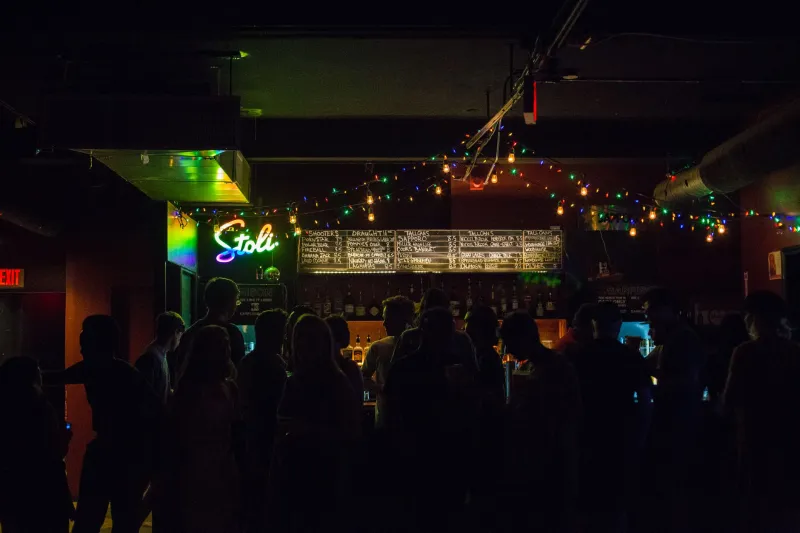
There's a particular kind of Friday night that every Detroit venue owner both dreams about and quietly dreads. The room is packed shoulder to shoulder. The bar is moving fast. The energy is exactly right. And somewhere near the front door, a familiar face — someone who's been coming every weekend for three years — is being told there's no room left.
That moment, small as it sounds, carries a weight that doesn't show up on any profit-and-loss statement.
"You build something for a community," says one operator who runs a mid-size music room in Corktown. "Then the community grows, other people find out about it, and suddenly the thing you built for your people is overflowing with strangers. That's a good problem, technically. But it doesn't always feel like one."
The Math That Doesn't Add Up Emotionally
Capacity limits exist for obvious reasons — fire codes, insurance requirements, basic safety. But the decisions that happen just below the ceiling of those limits are far murkier. A venue sitting at 85 percent capacity is leaving money on the table. Push to 100 percent and you risk the crowding, the long wait times at the bar, the general degradation of atmosphere that turns a beloved room into just another loud box.
Most operators in Detroit will tell you the sweet spot is somewhere around 75 to 80 percent — full enough to feel alive, loose enough that people can actually move and talk and connect. Getting there on purpose, night after night, is harder than it sounds.
"You're not just counting heads," explains the manager of a well-worn Eastern Market bar that's been pulling a loyal crowd since well before the neighborhood's recent boom. "You're reading the room. Forty people in the wrong configuration can feel more suffocating than seventy in the right one. And the second it tips into uncomfortable, you've lost the vibe you spent years building."
The ripple effects aren't just atmospheric. When regulars start feeling squeezed out — whether by literal crowd pressure or by a door policy that's started prioritizing reservation holders and event guests — they tend to drift. And when those foundational customers go, they take something harder to quantify than revenue. They take the institutional memory of the place.
Who Gets In When Everyone Wants In
The door is where these tensions become most visible. Detroit's nightlife has always had its own informal hierarchies — the regulars who get waved through, the faces the bartenders know, the unspoken understanding that certain rooms belong to certain people. That system, imperfect as it is, has historically served as a kind of cultural preservation mechanism.
But as more Detroit neighborhoods have attracted outside attention and investment, the door has become contested territory. Newer visitors — often with more spending power — are arriving in larger numbers. Event promoters bring in ticketed crowds that may have no prior relationship with the space. And venue owners, operating on margins that were already thin before inflation hit, are under real pressure to maximize every night.
"I've had to have hard conversations with myself about what we're actually doing here," admits the owner of a small live music venue in Mexicantown that's been a neighborhood anchor for over a decade. "Are we a community space that also charges a cover? Or are we a business that happens to feel like a community space? The answer changes depending on the week, and I'm not always proud of which one wins."
Some venues have tried to thread the needle through tiered systems — early entry for longtime regulars, reserved capacity held back from general ticketing, informal "locals nights" on slower weekdays. These solutions work, up to a point. But they also require a level of administrative overhead that small operations often can't sustain, and they can create their own resentments when the lines aren't drawn cleanly.
Gentrification's Long Shadow
It would be incomplete to talk about any of this without naming the broader context: Detroit is a city in the middle of a complicated, contested transformation. Neighborhoods that were written off a decade ago are now attracting real estate investment, new businesses, and residents with different economic profiles than those who stayed through the hard years. Nightlife venues sit at the intersection of all of that.
For many longtime Detroit music and bar spaces, the influx of new customers isn't just a capacity problem — it's a cultural one. The worry isn't simply that the room gets too crowded. It's that the crowd changes enough to alter the character of the space entirely. That the music shifts to accommodate new tastes. That the prices creep up. That the people who made the place worth discovering in the first place no longer feel at home in it.
"I've watched it happen to spots I loved," says a Detroit native who's been part of the city's underground music scene for nearly two decades. "The venue doesn't close. It just slowly becomes something else. And one day you walk in and you don't recognize it anymore, even though the address is the same."
Venue owners navigating this are doing so largely without a roadmap. There's no industry playbook for how to grow sustainably without hollowing out your own identity. The ones who seem to be managing it best are the ones who've made explicit, sometimes uncomfortable decisions about what they're willing to sacrifice — and what they're not.
Holding the Line Without Drawing One
What's striking, talking to operators across the city, is how personal these decisions feel. This isn't abstract business strategy. It's people wrestling with questions about loyalty, identity, and what it means to steward a space that matters to people beyond yourself.
The Corktown operator puts it simply: "Every night I turn someone away, I'm making a bet. I'm betting that protecting the experience inside is worth the cost of disappointing someone outside. Most nights I think that's right. Some nights I'm not so sure."
There's no clean resolution here. The venues that are thriving tend to be the ones where the owners have made peace with the ambiguity — where they've accepted that the choices will never be perfect and the best they can do is stay honest about what they're trying to protect and why.
Detroit's nightlife has survived a lot. Economic collapse, population loss, years of being overlooked. The current moment — too much attention, too much demand, too many people wanting a piece of something that was built on scarcity and community — is a different kind of pressure. But it's pressure nonetheless.
The door still opens every weekend. The question of who gets through it, and at what cost to everyone involved, is one Detroit's venues are still figuring out in real time.