Plates After Dark: How Detroit's Nightlife Venues Are Making Food the Main Event
There was a time — not that long ago — when eating at a Detroit bar meant settling for something frozen and reheated, maybe a basket of wings that arrived cold and slightly sad. You ate because you had to, not because you wanted to. The real reason you were there was the music, the drinks, the crowd. Food was an afterthought, a placeholder between rounds.
That era is quietly dying, and honestly, good riddance.
Across the city right now, something more interesting is happening. Venue owners are hiring actual chefs. Kitchens are getting serious equipment. Menus are getting reworked from scratch, sometimes seasonally. And the regulars who've been coming through these doors for years are noticing. Detroit's nightlife has always had an identity, but for the first time in a long time, that identity includes the food.
The Shift Nobody Saw Coming
Ask around and most people in the industry will point to the same general turning point: the years after the pandemic reshuffled everything. When venues reopened, the old model of cheap drinks and loud music wasn't enough to pull people back in the same numbers. People had gotten pickier. They'd cooked more at home, eaten better, developed opinions. And they weren't about to spend a Friday night somewhere that couldn't feed them properly.
"You couldn't just open your doors and expect everyone to show up like nothing happened," says one east side venue manager who asked not to be named. "People wanted a reason to stay. Like, a real reason. And a good plate of food is a reason."
The venues that figured this out early started quietly poaching talent from the restaurant world. Not celebrity chefs, nothing splashy — just people who knew how to run a real kitchen under pressure, who understood flavor and technique, and who could work the weird hours that nightlife demands.
When the Kitchen Gets Serious
Take what's happening in Midtown and Corktown, where a handful of bars and music spots have started operating what can only be described as legitimate restaurant programs running parallel to their nightlife operations. We're talking house-made sauces, locally sourced proteins, seasonal vegetables, and desserts that didn't come out of a plastic bag.
One venue operator in Corktown — who runs a space that books live music four nights a week — described the decision to invest in the kitchen as purely defensive at first. "Honestly, we were losing people to restaurants nearby. They'd come for the show but leave to eat somewhere else and then just... not come back. We were basically sending our own customers away."
So they brought in a chef with a background in New American cuisine and gave her the freedom to build a menu that could hold up under high volume but didn't feel like bar food. The result was a short, focused menu — maybe eight items on any given night — that rotated based on what was available locally. Duck fat fries. A smash burger that became a word-of-mouth obsession. A rotating grain bowl that somehow worked at midnight.
"We doubled our average ticket almost immediately," the operator says. "People weren't just buying drinks anymore. They were having dinner."
What the Regulars Are Saying
Spend a few nights out in Detroit right now and you'll hear this theme come up organically. The people who are deep in the scene — the ones who hit three or four spots on a weekend — have started factoring food into their decision-making in a way they didn't used to.
"I'll be honest, I pick where I'm going based on whether I know I can eat well," says Marcus, a 34-year-old who's been part of Detroit's music scene for over a decade. "There are spots I used to love that I barely go to anymore because the food is still an afterthought. And there are new spots I'm going to constantly because they figured it out."
His regular crew has a group chat where venue recommendations now routinely include notes on the kitchen. What used to be purely about who's spinning or who's playing has evolved into something more holistic. The vibe, the sound, the food — all of it matters now.
The Chef's Perspective
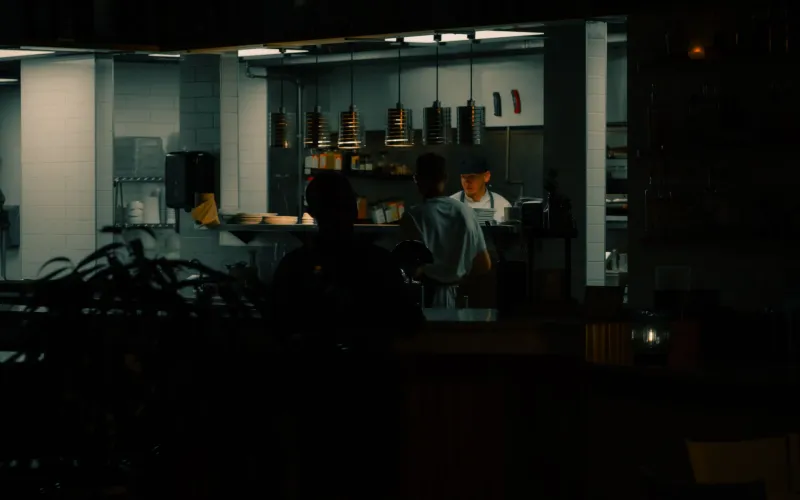
For the chefs who've made the jump from traditional restaurant kitchens into nightlife spaces, the appeal is real but the challenges are different. You're cooking for people who are drinking, who are distracted, who might order at 10pm or at 1am. The pace is unpredictable. The margin for error is slim because there's no reservation system buffering you from the chaos.
"In a restaurant you have some control," says one chef who transitioned from a well-regarded Detroit dining room to a venue kitchen about two years ago. "In a nightlife space you have almost none. You have to build a menu that can handle anything. Simple execution, bold flavors, stuff that holds up whether someone ordered it right when the kitchen opened or an hour before close."
What she's found, though, is that the audience is more forgiving in some ways and more demanding in others. They don't care about fine dining presentation — they're not there for that. But they absolutely care about whether the food is good, whether it feels intentional, whether it's worth the price. "They'll tell you immediately if something doesn't land," she says with a laugh. "There's no polite silence in a bar kitchen."
Food as Competitive Advantage
The economics here are real. Venues that have invested in their food programs are seeing longer dwell times, higher per-person spend, and stronger repeat business. People who stay to eat aren't just buying an extra round — they're anchoring their whole night to a specific spot instead of bouncing around.
For smaller, independent venues especially, this matters enormously. The ones that are struggling to compete on bookings alone — can't always land the biggest names, can't always win on room size or sound system — are finding that a genuinely great kitchen can level the playing field. You don't have to be the loudest room in Detroit if you're the room where people know they'll eat well.
It's also creating a different kind of loyalty. The regulars who come back for the food tend to stick around longer, tell their friends more enthusiastically, and show up even on nights when the lineup isn't their first choice.
What's Next
The direction this is heading seems clear. More venues in Detroit are going to have to make a decision about their kitchens — whether to take them seriously or accept that they're leaving something on the table. The ones who've already made the investment are already seeing the gap widen between themselves and the spots still running frozen mozzarella sticks.
There's also a cultural dimension worth noting. Detroit has always had serious food culture running alongside its music culture — these two things have deep roots in the same communities, the same neighborhoods. It almost makes more sense that they'd eventually merge in a meaningful way than that they'd stay separate.
The best nights out in this city have always been about more than one thing. That's never really changed. It's just that now, one of those things is increasingly a plate of food worth talking about the next morning.