After Last Call: The Hidden World Where Detroit's Night Workers Unwind
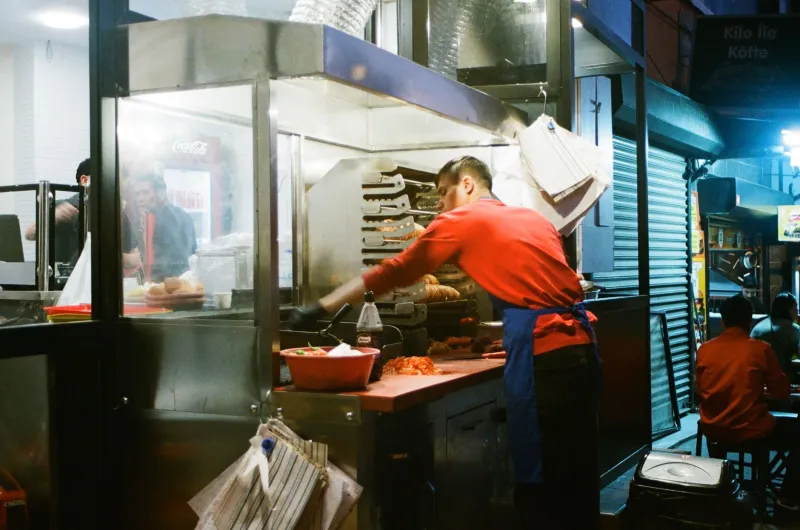
By the time most Detroiters are crawling into bed, Marcus is just sitting down to eat his first real meal since noon. He's a bartender at a busy venue in Midtown — Thursday through Sunday, 6 p.m. to 2 a.m. By the time he's cleaned his station, cashed out his drawer, and caught a ride, it's pushing 3:30. He's hungry, he's wired, and he's got nowhere to be until tomorrow afternoon.
This is the rhythm of Detroit's night economy. And for the thousands of people who keep the city's bars, clubs, kitchens, and stages running, the hours after last call aren't the end of the night. They're the beginning of something else entirely.
A City Within the City
Detroit's after-hours world doesn't announce itself. It exists in diners that never close, in back rooms that don't open until 4 a.m., in text chains and word-of-mouth invites that circulate among people who work the same impossible hours. It's a parallel social infrastructure — one built out of necessity, sustained by community, and largely invisible to anyone who keeps a nine-to-five.
The people who inhabit it — bartenders, DJs, line cooks, security staff, venue managers, coat check workers, sound engineers — share a particular kind of bond. They've all been on their feet for six, eight, ten hours. They've all dealt with the chaos and the beauty of a city that comes alive after dark. And when their shifts end, they want what everyone wants after a long day: food, company, and a place where they can just be.
The difference is, their day ended at 3 a.m.
Where the Food Finds You
Let's start with the basics. When you're coming off a closing shift, your options narrow fast. Most restaurants are locked up. Fast food exists, but there's only so many times you can do that. Detroit's night workers have developed their own mental map of places that actually feed them at the hours they need it.
A handful of 24-hour diners scattered across the city have become de facto industry hangouts — not because they're glamorous, but because they're open, they're honest, and the staff doesn't blink when a table fills up with people who are still in their work clothes at 4 in the morning. Coney Island spots, a Detroit institution in their own right, pull a lot of this weight. There's something deeply right about a bowl of chili and a cup of coffee at an hour when the rest of the world is asleep.
Beyond the diners, Detroit's food truck scene has quietly extended its reach into the late-night worker economy. A few operators have figured out that parking near high-volume venue districts at 2:30 a.m. means a crowd that's hungry, grateful, and tips well. It's not a movement yet, but it's growing.
For workers who want something more substantial — or something that feels less like a pit stop — there are a handful of late-night kitchen setups that operate more like private supper clubs than restaurants. These aren't places you'll find on Yelp. You hear about them because someone who works nights told you, and you tell someone else. That's the whole marketing strategy.
The After-Party That Isn't a Party
Here's something civilians don't always understand: industry after-hours isn't necessarily about going harder. A lot of the time, it's about decompression. Coming down from a high-energy shift in a packed venue isn't like coming down from a regular workday. Your nervous system is still running hot. You need somewhere to land.
For Detroit's DJ and electronic music community — which is substantial and deeply rooted — that often means smaller gatherings in private spaces or loft apartments where the music continues but the pressure doesn't. These aren't ragers. They're more like extended conversations with a soundtrack. The guest list is loose but understood: you were there, you work this world, you're welcome.
Some of the city's longer-running underground venues have historically served this function, offering a second-wind space for the people who just finished working their own events. Detroit's techno culture, with its history of all-night warehouse parties and its tradition of DJs playing for other DJs, practically invented this ecosystem. It's been going on since the late '80s, and it hasn't stopped.
What's shifted is the texture of it. Post-pandemic Detroit saw a lot of informal gathering spaces emerge — backyard setups, warehouse pop-ups, rotating house party series — that filled in the gaps left by venues that didn't survive. Many of those spaces are still running, and night workers have folded them into their regular rotation.
The Social Fabric Nobody Talks About
Spend time in Detroit's after-hours world and you start to notice something. The same faces show up everywhere. The bartender from one spot is friends with the sound tech from another. The DJ who just finished a set at a club in Corktown ends up at the same diner booth as the security crew from a venue two miles away. This is a community, not just an industry.
That social density matters. Night work is isolating in ways that are hard to explain to people who've never done it. Your schedule is inverted. Your free time doesn't line up with your friends' free time. Holidays are your busiest nights. You miss birthdays, dinners, normal Saturday afternoons. The people who get it are the people living the same schedule.
Which is why the spaces that cater to night workers — knowingly or not — tend to feel less like venues and more like community centers. The diner where the waitstaff knows your order. The after-hours spot where you don't have to explain why you're still awake. The group chat that pings at 3 a.m. with a location and nothing else.
"These are my people," one Detroit bartender told us, gesturing at a table full of coworkers and industry friends at a diner near Woodward. "We're all on the same clock. We look out for each other."
What the City Owes Its Night Workers
Detroit's nightlife wouldn't exist without the people who run it. The bartenders who memorize your drink, the DJs who read the room, the security staff who keep things from going sideways, the kitchen workers who plate the late-night orders — these are the people who make the city's entertainment economy function.
And yet the infrastructure that serves them after hours is almost entirely self-built. It exists because night workers created it for themselves, because they needed it and nothing else was there.
There's an argument — and it's a good one — that Detroit's venues and the broader entertainment industry should invest more intentionally in this ecosystem. Staff meals, after-shift spaces, industry-night programming that actually works for people who close on weekdays. Some spots are already doing this. More should.
For now, though, the 3 a.m. economy in Detroit runs on community, habit, and the quiet understanding that some of the best conversations this city has ever had happened in a diner booth long after everyone else went home.
You just had to be on the right schedule to hear them.