Ears to the Ground: The Sound Engineers Keeping Detroit's Nights from Falling Apart
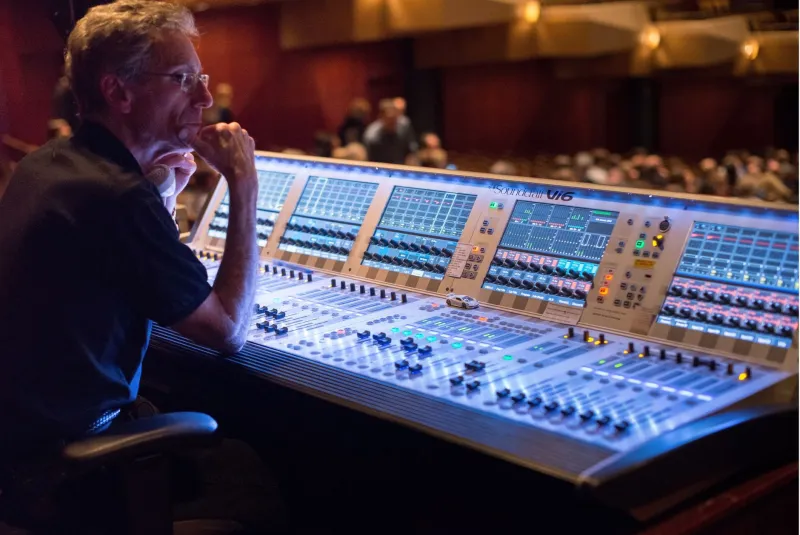
The DJ is mid-set. The room is locked in. Then — nothing. A split second of silence that feels like an eternity to everyone on stage, and an absolute gut-punch to the person standing at the soundboard. But by the time the crowd even registers something happened, the fix is already in motion. That's not luck. That's Marcus Webb doing what he's done for the better part of two decades across Detroit's live music circuit.
"Most people think the sound guy just turns knobs," Marcus says, leaning back against a road case outside a Corktown venue after a Thursday night load-in. "But you're really running triage all night long. Something's always about to go wrong. Your job is to make sure it goes wrong quietly — and that you're already halfway to fixing it before anyone knows."
Sound engineers like Marcus are the connective tissue of Detroit's live scene. They don't get the Instagram post. They don't get the encore. But without them, there is no night.
The Invisible Architecture of a Live Event
Walk into any serious venue in Detroit — the Majestic, the Shelter, TV Lounge, any of the clubs running a full production setup — and you'll find a front-of-house engineer managing an ecosystem of inputs, outputs, signal chains, and acoustic variables that most patrons couldn't begin to describe. It's part science, part muscle memory, part instinct developed through hundreds of nights on the floor.
Kia Fontenot has been engineering shows in Detroit for eleven years, working everything from intimate jazz sets in Midtown to warehouse techno nights in the Eastern Market corridor. She describes her prep work as something close to studying for an exam you know will include surprise questions.
"I always walk the room before doors," she says. "I'm listening to how sound bounces. Every room is different — different ceiling height, different materials, different crowd density once people show up. You're building a mental map before you ever play a single note through the system."
That map gets tested the moment something unexpected happens. And in live audio, unexpected is basically a given.
When the Gear Fights Back
Feedback — that piercing shriek that makes everyone in a room wince — is the nightmare scenario most people associate with live audio problems. But engineers will tell you that the more insidious threats are the ones that creep up quietly: a cable that starts cutting out intermittently, a DI box losing signal on one channel, a digital console that decides to freeze mid-performance.
Terrence Okafor, who's worked Detroit venues for over fifteen years and has toured with regional acts, keeps a go-bag of backup gear that he calls his "insurance policy." It includes redundant cables, spare DI boxes, a backup interface, and what he describes as "enough gaff tape to hold a space shuttle together."
"Equipment doesn't care what night it is," Terrence says with a laugh. "It'll fail on a sold-out Friday just as fast as a Tuesday. So you pre-solve problems. You don't wait for them to happen."
Pre-solving, as Terrence describes it, means running redundant signal paths wherever possible, doing full soundchecks even when a DJ insists they don't need one, and quietly monitoring levels throughout a set rather than assuming everything is fine because it sounds fine right now.
Reading the Room (Literally)
One of the most underappreciated skills in live audio is something engineers call "riding the room" — making real-time adjustments based on how a crowd absorbs and reflects sound. An empty venue and a packed one are acoustically two completely different spaces. Bodies absorb high frequencies. Crowd noise raises the ambient floor. A mix that sounded perfect during soundcheck can turn muddy or harsh once three hundred people are dancing.
Kia describes it as a constant conversation. "You're always listening, always adjusting. The mix isn't static. It's alive. And if you're not paying attention, it'll drift on you."
For DJ-driven nights specifically, the challenge compounds. DJs work with pre-recorded tracks that weren't mixed for a live room, and the engineer has to translate that into something that feels right in the space without altering the DJ's artistic intent. It requires communication — and trust.
"The best nights I've had are when the DJ and I are actually talking," Marcus says. "They tell me what they need, I tell them what I'm hearing from the floor. It becomes a collaboration. The worst nights are when someone just plugs in and assumes everything will work itself out."
The Unspoken Language of the Stage
There's a whole vocabulary of hand signals, nods, and looks that develop between engineers and performers over time. A thumb pointed down means more in the monitor. A hand cupped behind an ear means "I can't hear myself." A flat palm means "hold steady, don't touch anything."
Terrence has worked with some performers long enough that they barely need to communicate at all. "You learn what someone needs. You know when they're about to reach for a mic and push it further from the speaker stack. You anticipate. That's really the job — anticipating before the problem exists."
That anticipation extends to the technical side as well. Experienced engineers develop an almost physical sensitivity to the sound coming through the system. They can hear a slight buzz in a monitor that signals a grounding issue before it becomes a hum. They notice when a bass frequency is starting to push a speaker harder than it should. They catch things that haven't fully broken yet.
The Nights That Define You
Every engineer in Detroit has a story about a night that tested everything they had. Kia's involves a digital snake — the device that routes audio signals from the stage to the board — failing completely forty minutes before a headlining set at a venue that had sold out weeks in advance.
"I had twenty minutes to rewire the whole stage analog," she says. "Old-school, point-to-point. The opener was still playing. I was crawling under the stage in the dark, just working."
The headliner went on time. The crowd had no idea anything happened.
That's the measure of the job. Not the nights that go smoothly — those are expected. It's the nights that nearly fell apart, and didn't, because someone at the board refused to let them.
Detroit's live scene runs on reputation, on energy, on the feeling that something real is happening in the room. Sound engineers are the ones making sure that feeling never gets interrupted. They're not in the spotlight. But they're the reason the spotlight works.
Next time you're at a show and everything sounds exactly right — the bass hits clean, the vocals cut through, the room feels alive — take a second to look toward the back of the house. Someone back there just made that happen. And they're already listening for the next thing that might go wrong.